Happy New Year 2026 Wishes Images, Quotes, Status: Share wishes with friends and family
Happy New Year 2026 Wishes Images, Quotes, Status, Wallpapers, Greetings Card, Messages, Photos, Pics: As 2025 New Year’s Eve celebrations unfold worldwide today, people prepare to welcome the New Year 2026 with vibrant fireworks, festive gatherings, and thoughtful resolutions.
IndianExpress.com has curated a selection of warm wishes, inspirational messages, eye-catching images, and social media updates to help readers share the spirit of the season and celebrate the New Year on a joyful, uplifting note.
Happy New Year 2026: Warm wishes to share with family
May 2026 bring our family good health, happiness, and peace.
Wishing a New Year filled with love, laughter, and togetherness.
THE STAR, Wednesday 17 december 2025. 6 Nation. MINISTERS. DEPUTY MINISTERS. THE UNITY CABINET 2025. Datuk Seri. Anwar Ibrahim. PH-PKR (TAMBUN).Read more
The premier announced more than 25 changes to his Cabinet after previously saying that a major reshuffle was not on the cards.
Malaysia Prime Minister Anwar Ibrahim shows a list of his Cabinet appointments after announcing a reshuffle on Dec 16, 2025. (Photo: Prime Minister’s Office of Malaysia/Afiq Hambali)
KUALA LUMPUR: Malaysian Prime Minister Anwar Ibrahim announced sweeping changes to his Cabinet on Tuesday (Dec 16), ending weeks of speculation over ministerial vacancies.
Notable changes - among more than 25 announced - include the appointments of United Malays National Organisation (UMNO) stalwart Johari Ghani as the new Investment, Trade and Industry Minister and Parti Keadilan Rakyat’s (PKR) Akmal Nasir as Economy Minister. There are 65 Cabinet posts in total.
Johari was previously Minister for Plantations and Commodities while Akmal was Deputy Minister of Energy Transition and Water Transformation.
A composite image of newly-appointed investment, trade and industry minister Johari Ghani (left) and economy minister Akmal Nasir (right). (Photos: Facebook/Johari Abdul Ghani, Facebook/Akmal Nasir)
During the internal PKR polls in May, Akmal was seen as closely aligned to Rafizi Ramli, who resigned as Economy Minister after he was defeated by Anwar’s daughter Nurul Izzah in a contest to be the party’s deputy president.
UMNO is an ally of Anwar’s Pakatan Harapan (PH) ruling coalition, and the investment, trade and industry portfolio was previously held by Tengku Zafrul Aziz, who was an UMNO member before leaving the party to join the prime minister’s PKR.
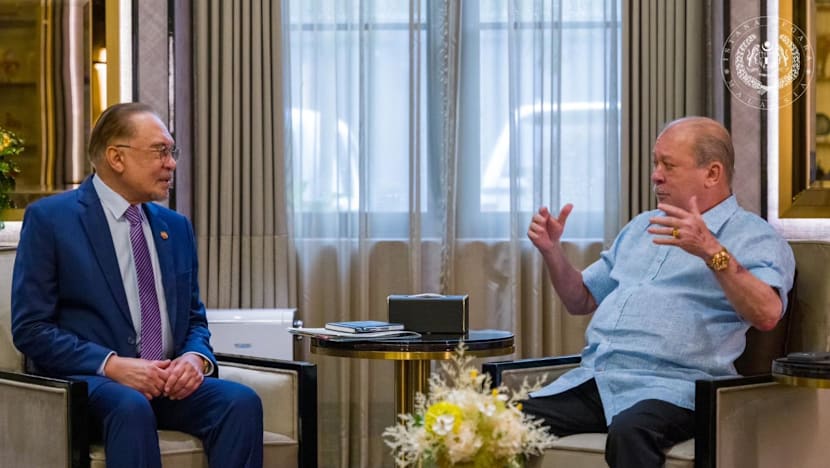
Malaysia Prime Minister Anwar Ibrahim held a meeting with Malaysian king Sultan Ibrahim Sultan Iskandar at Istana Bukit Tunku in Kuala Lumpur on Dec 16, 2025. (Photo: Facebook/Sultan Ibrahim Sultan Iskandar)
Speaking at the start of the press conference before he announced the changes, Anwar said: “There is a need to make some changes so that we have a Cabinet that works as a team, to focus on achieving higher economic growth and solving people's problems.”
He had met the king Sultan Ibrahim Sultan Iskandar on Tuesday morning, and said in a Facebook post in the afternoon that he would make an announcement on the Cabinet at 3.30pm that day.
Among the changes he announced, Arthur Josep Kurup of the United Sabah People’s Party was appointed Natural Resources and Environmental Sustainability Minister, PKR vice-president R Ramanan was appointed Human Resources Minister while head of UMNO women’s wing Noraini Ahmad was appointed Minister for Plantations and Commodities.
Democratic Action Party’s (DAP) Hannah Yeoh was reassigned from her Minister for Youth and Sports portfolio to be Minister in the Prime Minister’s Department (Federal Territories), with PKR’s Taufiq Johari taking her place.
PKR’s Mustapha Mohd Yunus Sakmud was appointed Minister for Sabah and Sarawak while DAP’s Steven Sim was reassigned from his Human Resources portfolio to be Minister for Entrepreneur Development and Cooperatives.
Senator and Islamic scholar Zulkifli Hasan was appointed Minister for Religious Affairs.
The changes to Anwar’s Cabinet - including full minister and deputy minister positions - saw some members being reassigned while others were new appointments.
Full ministers who were dropped completely from the line-up included PKR’s Zaliha Mustafa who was Minister in the Prime Minister’s Department (Federal Territories) and Minister for Religious Affairs Mohd Na’im Mokhtar.
Na'im's exclusion was a surprise as he was sworn in as a senator for a second term on Dec 3.
Notably, Malaysia's Education Minister Fadhlina Sidek retained her post despite facing criticism for her perceived lack of action and slow response on serious school issues like bullying, with student deaths triggering public outcry for her to resign.
Earlier this month, three ministers were also sworn in as senators for a second term. Besides Na'im, they included Home Minister Saifuddin Nasution Ismail and Higher Education Minister Zambry Abdul Kadir.
A minister in Malaysia must be an elected member of parliament (MP) in the lower house or an appointed senator in the upper house.
On Dec 1, Anwar had said that a major reshuffle of his Cabinet is not on the cards, noting that his administration will “only function for a year plus” as Malaysia’s next general election is due by February 2028.
However, there was speculation that changes to his Cabinet were imminent, with Tengku Zafrul stepping down from his Investment, Trade and Industry Minister portfolio earlier this month, creating a fourth ministerial vacancy.
Tengku Zafrul had served for two terms as a senator since 2020. He held the trade minister post throughout his term in the Senate, which is the maximum period allowed.
Nik Nazmi Nik Ahmad had resigned as the Natural Resources and Environmental Sustainability Minister in May, while Ewon Benedick resigned as the Entrepreneur Development and Cooperatives Minister in November, ahead of the Sabah state elections.
Ewon had resigned over disagreements with the federal government on issues related to Sabah’s 40 per cent entitlement of federal net revenue derived from the state.
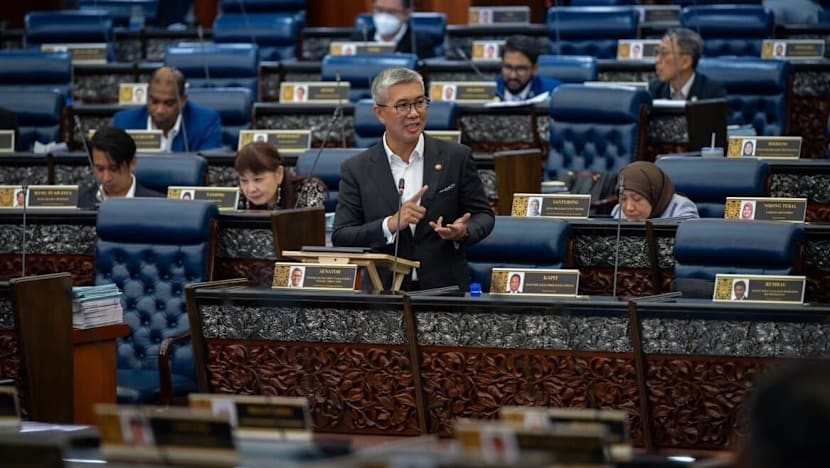
Former trade minister Tengku Zafrul Abdul Aziz on his last day in the Dewan Rakyat. (Photo: Instagram/@tzafrul_aziz)
Meanwhile, like Rafizi, Nik Nazmi had resigned following defeat in party elections within PKR.
Second Finance Minister Amir Hamzah took over the economy portfolio in the interim while Johari Ghani helped to handle natural resources and environment sustainability.
Ewon’s former portfolio was being managed by works minister Alexander Nanta Linggi starting Dec 3, local media reported.
Malaysia Prime Minister Anwar Ibrahim shows a list of his Cabinet appointments after announcing a reshuffle on Dec 16, 2025. (Photo: Prime Minister’s Office of Malaysia/Afiq Hambali)
KUALA LUMPUR: Malaysian Prime Minister Anwar Ibrahim announced sweeping changes to his Cabinet on Tuesday (Dec 16), ending weeks of speculation over ministerial vacancies.
Notable changes - among more than 25 announced - include the appointments of United Malays National Organisation (UMNO) stalwart Johari Ghani as the new Investment, Trade and Industry Minister and Parti Keadilan Rakyat’s (PKR) Akmal Nasir as Economy Minister. There are 65 Cabinet posts in total.
Johari was previously Minister for Plantations and Commodities while Akmal was Deputy Minister of Energy Transition and Water Transformation.
A composite image of newly-appointed investment, trade and industry minister Johari Ghani (left) and economy minister Akmal Nasir (right). (Photos: Facebook/Johari Abdul Ghani, Facebook/Akmal Nasir)
During the internal PKR polls in May, Akmal was seen as closely aligned to Rafizi Ramli, who resigned as Economy Minister after he was defeated by Anwar’s daughter Nurul Izzah in a contest to be the party’s deputy president.
UMNO is an ally of Anwar’s Pakatan Harapan (PH) ruling coalition, and the investment, trade and industry portfolio was previously held by Tengku Zafrul Aziz, who was an UMNO member before leaving the party to join the prime minister’s PKR.
Malaysia Prime Minister Anwar Ibrahim held a meeting with Malaysian king Sultan Ibrahim Sultan Iskandar at Istana Bukit Tunku in Kuala Lumpur on Dec 16, 2025. (Photo: Facebook/Sultan Ibrahim Sultan Iskandar)
Speaking at the start of the press conference before he announced the changes, Anwar said: “There is a need to make some changes so that we have a Cabinet that works as a team, to focus on achieving higher economic growth and solving people's problems.”
He had met the king Sultan Ibrahim Sultan Iskandar on Tuesday morning, and said in a Facebook post in the afternoon that he would make an announcement on the Cabinet at 3.30pm that day.
Among the changes he announced, Arthur Josep Kurup of the United Sabah People’s Party was appointed Natural Resources and Environmental Sustainability Minister, PKR vice-president R Ramanan was appointed Human Resources Minister while head of UMNO women’s wing Noraini Ahmad was appointed Minister for Plantations and Commodities.
Democratic Action Party’s (DAP) Hannah Yeoh was reassigned from her Minister for Youth and Sports portfolio to be Minister in the Prime Minister’s Department (Federal Territories), with PKR’s Taufiq Johari taking her place.
PKR’s Mustapha Mohd Yunus Sakmud was appointed Minister for Sabah and Sarawak while DAP’s Steven Sim was reassigned from his Human Resources portfolio to be Minister for Entrepreneur Development and Cooperatives.
Senator and Islamic scholar Zulkifli Hasan was appointed Minister for Religious Affairs.
The changes to Anwar’s Cabinet - including full minister and deputy minister positions - saw some members being reassigned while others were new appointments.
Full ministers who were dropped completely from the line-up included PKR’s Zaliha Mustafa who was Minister in the Prime Minister’s Department (Federal Territories) and Minister for Religious Affairs Mohd Na’im Mokhtar.
Na'im's exclusion was a surprise as he was sworn in as a senator for a second term on Dec 3.
Notably, Malaysia's Education Minister Fadhlina Sidek retained her post despite facing criticism for her perceived lack of action and slow response on serious school issues like bullying, with student deaths triggering public outcry for her to resign.
Earlier this month, three ministers were also sworn in as senators for a second term. Besides Na'im, they included Home Minister Saifuddin Nasution Ismail and Higher Education Minister Zambry Abdul Kadir.
A minister in Malaysia must be an elected member of parliament (MP) in the lower house or an appointed senator in the upper house.
On Dec 1, Anwar had said that a major reshuffle of his Cabinet is not on the cards, noting that his administration will “only function for a year plus” as Malaysia’s next general election is due by February 2028.
However, there was speculation that changes to his Cabinet were imminent, with Tengku Zafrul stepping down from his Investment, Trade and Industry Minister portfolio earlier this month, creating a fourth ministerial vacancy.
Tengku Zafrul had served for two terms as a senator since 2020. He held the trade minister post throughout his term in the Senate, which is the maximum period allowed.
Nik Nazmi Nik Ahmad had resigned as the Natural Resources and Environmental Sustainability Minister in May, while Ewon Benedick resigned as the Entrepreneur Development and Cooperatives Minister in November, ahead of the Sabah state elections.
Ewon had resigned over disagreements with the federal government on issues related to Sabah’s 40 per cent entitlement of federal net revenue derived from the state.
Former trade minister Tengku Zafrul Abdul Aziz on his last day in the Dewan Rakyat. (Photo: Instagram/@tzafrul_aziz)
Meanwhile, like Rafizi, Nik Nazmi had resigned following defeat in party elections within PKR.
Second Finance Minister Amir Hamzah took over the economy portfolio in the interim while Johari Ghani helped to handle natural resources and environment sustainability.
Ewon’s former portfolio was being managed by works minister Alexander Nanta Linggi starting Dec 3, local media reported.
YOUR core is like Wifi – when it’s weak, everything disconnects.
1
Dead bug with heel slide: 1. Lie on your back with both your knees bent
at 90° in the air. exhale fully to engage the core, then bring one foot
down to touch the floor. — Photos: dr Sitaramarao nageswerarav
A hundred sit-ups a day won’t give you a strong core.
That’s
because the core isn’t just your abs (abdominal muscles) – it’s the
network of deep muscles around your stomach, back and hips that keeps
your body balanced, supported and stable.
Your core is your body’s central stabiliser, even your spine depends on it for support.
Decreased
movement or overdoing a movement, coupled with weight gain and poor
nutrition, weakens the spine and connective tissues, causing the
latter to wear down.
This eventually leads to chronic lower back pain, disc herniation and poor posture.
> Lateral and posterior core - the core-to-hip connectors > Functional network - supporting stabilisers for everyday movement.
A strong core:
> Keeps your posture upright
and confident
> Protects your back from injury,
and
> Improves balance and everyday movement.
When the core is weak, the spine loses its natural brace.
Spinal segments start to shear and compress, leading to chronic lower back pain, disc herniation and poor posture.
Your posture is a mirror of your health, so pay attention to it!
Other effects include:
> A rounded upper back (kyphosis)
> Pelvic tilt or exaggerated lumbar curve
> Core inhibition and gluteal amnesia (yes, your butt can “forget” how to work).
The longer you sit, the more your core muscles disengage, causing your brain to “forget” about them.
From the age of 35 onwards, muscle mass begins to decline.
The
deep stabilisers, such as the transversus abdominis, are often the
first to weaken because they’re rarely activated in daily life.
Even
regular gym-goers tend to train what they can see (e.g. arms, chest
and legs), rather than what they can feel (e.g. the deep core).
However, you don’t need fancy machines to train your core. Try this instead:
> Tighten your abdominal wall (like bracing for a gentle punch) while walking, climbing stairs or carrying groceries.
>
Sit tall, walk upright and stretch for five minutes every half-an-hour
of sitting. Small adjustments in breathing and posture make a big
difference.
Two other powerful core exercises you can do at home are:
> Dead bug with heel slide (deep core repatterning)
This exercise targets the transverse abdominis, pelvic stabilisers and deep spinal flexors.
It retrains coordination between the
diaphragm, core and your pelvic floor – all crucial for posture and
spine support. > Half-kneeling pallof press (rotational
stability for real life)
This exercise targets the obliques, multifidus, gluteus medius and transversus abdominis.
It builds anti-rotation strength – the body’s defence against twisting stress during daily activities.
As unconventional as these moves may seem, they’re backed by solid research and proven to improve functional strength and posture.
The core doesn’t age – we do. Train it now or prepare to make friendship bracelets with your chiropractor later.
Dr
Sitaramarao Nageswerarav is a general practitioner (GP) and
certified fitness trainer. This is the first of a three-part series,
which will be published fortnightly. For more information, email
starhealth@thestar.com.my.
The
information provided is for educational and communication
purposes only, and should not be considered as medical advice. The
Star does not give any warranty on accuracy, completeness,
functionality, usefulness or other assurances as to the content
appearing in this article. The Star disclaims all responsibility
for any losses, damage to property or personal injury suffered
directly or indirectly from reliance on such information.
7 Great Core Strengthening Exercises - Ask Doctor Jo
896,950 views22 Mar 2018
Core strengthening exercises are great for improving your core strength. They can help prevent injury, increase core stability, and improve balance. I start with some beginner core exercises & then progresses to harder ones. More core exercises: • Swiss Ball Core & Back Strengthening Exerc...
Progress through these core strength exercises at your own pace. If this is your first time doing core exercises, you may not be ready for the last ones yet. It's better to do the easy ones first and then see how you feel the next day.
The first exercise is a pelvic tilt. This is great to get the core moving, and strengthening the whole pelvic area.
The second core exercise is going into a bridge. This not only works your core, but it also works your glutes and hamstrings. If two legs are easy, you can do them with one leg at a time.
The third exercise is with a Swiss or therapy ball. A prayer plank on the ball is a great way to activate your core. You can do this modified or a full plank.
Next you will do a trunk rotation lying down with your feet on the ball. This is great for your oblique muscles. You can also do the trunk rotation seated on the ball. Using a weight will give you an extra workout, but you don’t have to use one.
Now for some harder ones for core strengthening. This one is in tall kneeling, and you will lean back slightly. You can have someone hold onto your feet, or you can place them under something for support. When you are ready, you can do them without any support. This works your core, glutes, hamstrings, and quads.
Finally you will do a standing march with elbow tap. You can do this on the same side or opposite sides. Try not do bend your back forward, and use your core to lift your knees.
Related Videos:
Back Pain Core & Back Strengthening Exercises:
• Back Pain Core & Back Strengthening Exerci...
Exercise Ball Core and Back Strengthening Exercises (Moderate):
• Exercise Ball Core and Back Strengthening ...

 Happy New Year 2026 Wishes Images, Quotes, Status: Share wishes with friends and family



 https://www.pressreader.com/malaysia/the-star-malaysia/20251207/282492895014630
